
Saturday, July 5, 2014
Setting up an activity center in your house


Home made puzzles


You can then ask your child to match the letters or numbers with plastic letters and numbers to put on top.
With home made puzzles you an work on number, letter and color recognition and your child will see it as a game.


Matching numbers

Other options:
- Call out a number and ask the kid to jump on the matching one on the floor;
- Say a number and ask them to find it and mark it with a pom pom or put a figurine or dice or cheerios on it.
Thursday, January 30, 2014
Paper mittens
Hanging paper mittens on a clothesline is fun and allows your kid to work on his/her fine motor skills thanks to the use of pegs. You can also adapt it to your teaching needs: write numbers on the mittens and have your child roll a die and run to the mitten with the matching number or make colors dice and use it the same way to have fun with color recognition and, why not, a bit of exercise!
The activity itself of hanging the mittens on the the thread is both challenging and engaging: you'll see your child really focus :)
Draw and cut out several pairs of mittens on colorful paper or cardstock paper.
Options:
1. Use a thread from a chair to another chair and ask the child to hang the mittens with pegs.
2. Ask the child to find the matching mitten (by color, or number written on it, or phonics, or letter)
3. Color and decorate the paper mittens (also: glitter, stickers, etc.)
4. Lacing (poke holes and use colorful threads for lacing)
5. Tracing
My children asked me to play this game over and over again!

(Original idea from http://teaching2and3yearolds.com/last-january/)
The activity itself of hanging the mittens on the the thread is both challenging and engaging: you'll see your child really focus :)
Draw and cut out several pairs of mittens on colorful paper or cardstock paper.
Options:
1. Use a thread from a chair to another chair and ask the child to hang the mittens with pegs.
2. Ask the child to find the matching mitten (by color, or number written on it, or phonics, or letter)
3. Color and decorate the paper mittens (also: glitter, stickers, etc.)
4. Lacing (poke holes and use colorful threads for lacing)
5. Tracing
My children asked me to play this game over and over again!
(Original idea from http://teaching2and3yearolds.com/last-january/)
Sunday, January 26, 2014
Running with numbers
This game can be played both outdoors and indoors.
Write numbers 0 to 20 or 0 to 10 or just decimals (depending on your children and your teaching goal) on paper. Your child can either write the numbers, if he/she can already do that, or just trace them if you write them with dots, or simply help you decorate them, paint them, color them, and so on.
Ask your child to help you spread them around the garden, making sure they are not lying flat on the floor, but can actually easily be seen from a distance. Ask the child to say the numbers out loud as they choose where to put them.
Then, you can start calling one number at a time. The child needs to run fast towards that number and pick it up and put it in a bag. You can choose to call the numbers in numerical order and/or mix them up.
Great fun, good exercise and great for remembering numerical order and counting.
Indoor version: you can write the numbers on smaller pieces of paper, scatter them on the table and call the numbers. The child needs to help figurines, or little toys or even stuffies find the right number.
Write numbers 0 to 20 or 0 to 10 or just decimals (depending on your children and your teaching goal) on paper. Your child can either write the numbers, if he/she can already do that, or just trace them if you write them with dots, or simply help you decorate them, paint them, color them, and so on.
Ask your child to help you spread them around the garden, making sure they are not lying flat on the floor, but can actually easily be seen from a distance. Ask the child to say the numbers out loud as they choose where to put them.
Then, you can start calling one number at a time. The child needs to run fast towards that number and pick it up and put it in a bag. You can choose to call the numbers in numerical order and/or mix them up.
Great fun, good exercise and great for remembering numerical order and counting.
Indoor version: you can write the numbers on smaller pieces of paper, scatter them on the table and call the numbers. The child needs to help figurines, or little toys or even stuffies find the right number.
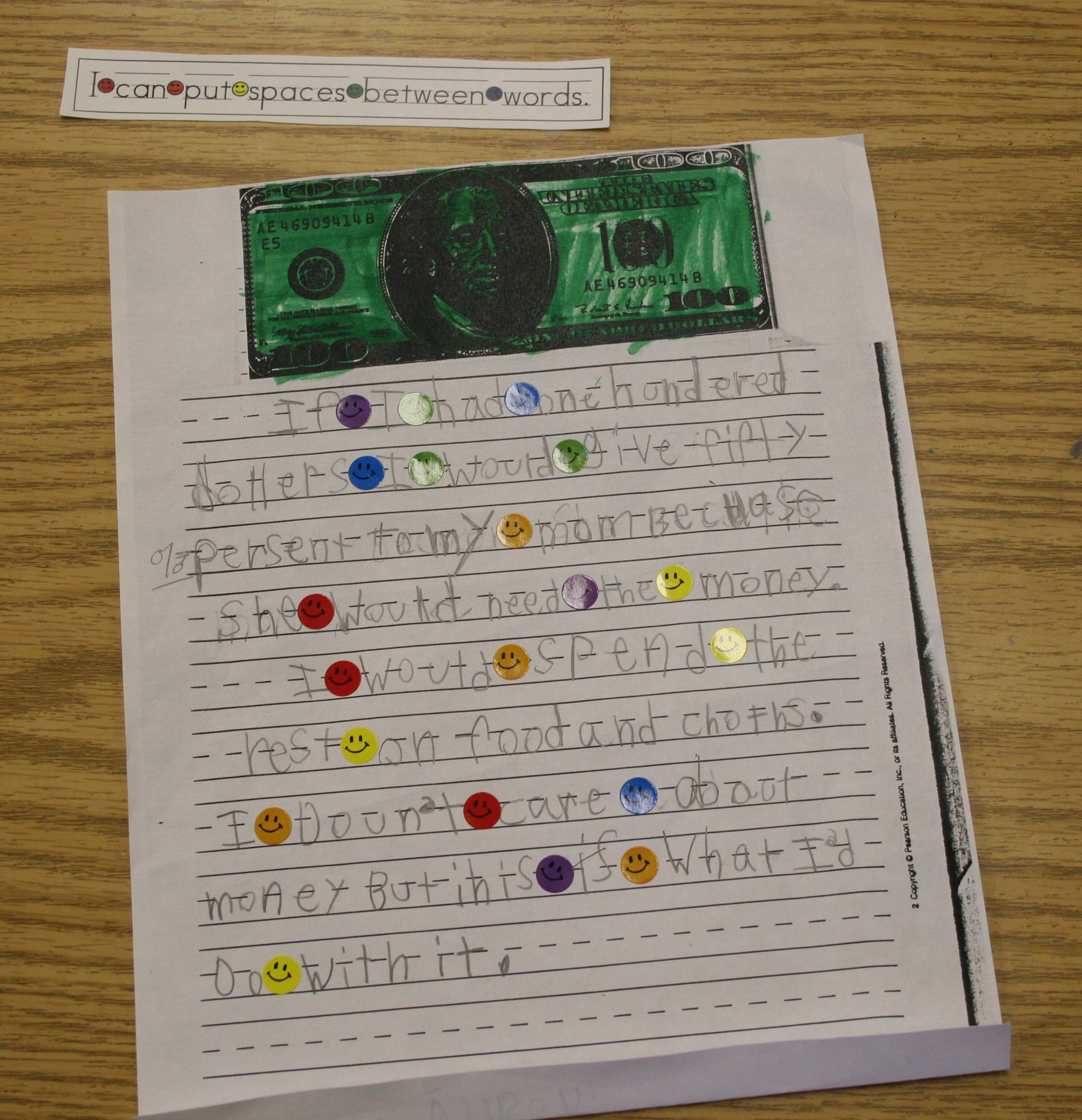
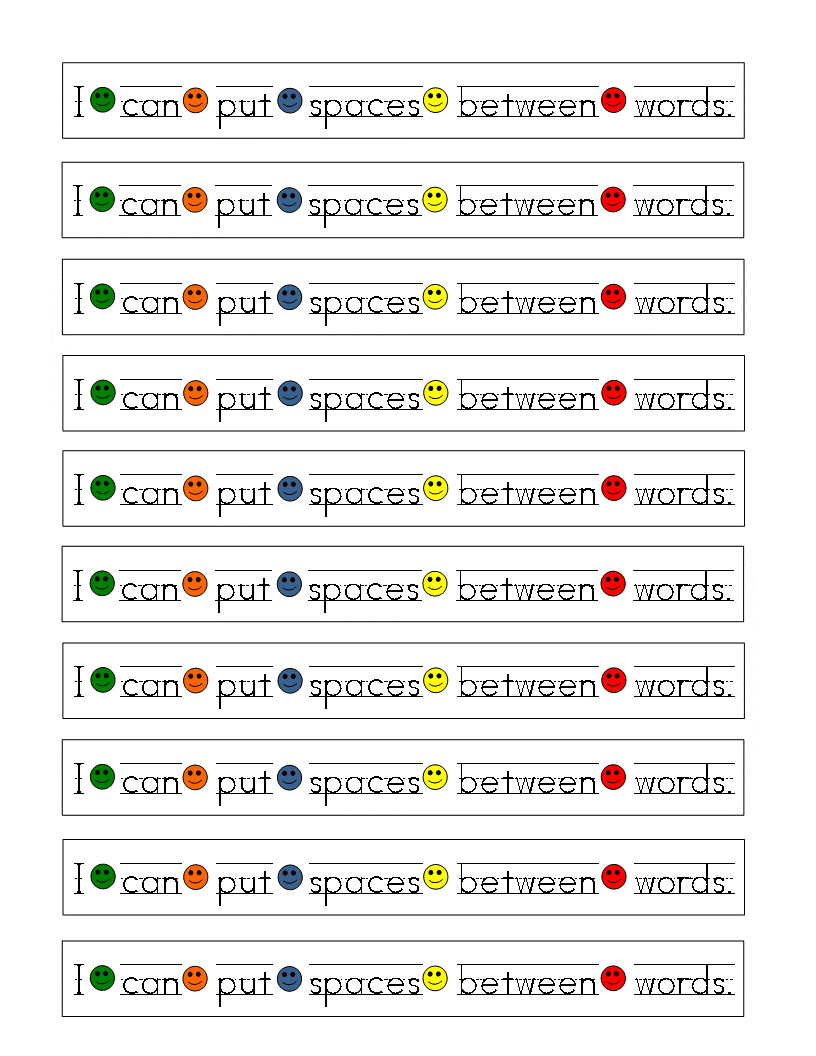
Teaching your child to space between words
I found this strategy here: http://blog.maketaketeach.com/teaching-students-to-space-between-words/#_


Subscribe to:
Posts (Atom)